Here’s a question I’ve been asking myself lately:
Why do we treat PDFs and slide decks like they’re usable in AI workflows?
Most of the time I need to do markup and add context to pages or slides for better results.
Most of us in the data/AI space have wrestled with messy document inputs: scanned invoices, Word docs with 5 different header styles, tables embedded inside slide decks, you name it. And when it comes to GenAI, especially RAG systems, we spend way too much time wrangling source material into something usable.
That’s why IBM’s new open-source project, Docling, caught my attention.
It’s the first tool I’ve seen that treats document preprocessing as a first-class citizen in the AI pipeline, one that understands layout, structure, and governance… and speaks the same language as LangChain, LlamaIndex, and modern RAG stacks.
Let’s dig into why this matters, and how it unlocks a better future for document-driven AI.
Key Takeaways
- Docling makes documents “AI-ready” by converting PDFs, DOCX, PPTX, and more into structured, transparent Markdown or JSON.
- It’s built with GenAI and RAG in mind optimized for fast, clean ingestion into LLM pipelines.
- Supports layout-aware parsing, including OCR, tables, reading order, and nested sections.
- Plays nice with LangChain, LlamaIndex, and your existing toolchain thanks to modular outputs and open formats.
- Enterprise-friendly with Unity Catalog support, auditability, and governance-first thinking.
- Open source and ready to go, just pip install and start parsing.
Why “AI-Ready” Documents Matter
You don’t realize how bad your documents are until you try to use them in GenAI systems.
Plain-text extraction loses structure. Tables get flattened. Headings disappear. OCR might work… or not. And suddenly your chatbot is hallucinating answers because the context window got a blurry JPEG of a graph.
Docling flips the script: it gives structure, hierarchy, and meaning to unstructured documents—before they even reach the LLM.
It’s like an ETL tool, but for context. And that’s something most RAG pipelines have been missing.
Built for Real-World Document Headaches
What makes Docling stand out from typical document loaders?
- Understands layout, not just text – Whether it’s a slide deck with callout boxes or a scanned contract, Docling reconstructs the reading order.
- Knows when a table is a table – And it doesn’t turn it into jumbled tokens. It gives you structured table outputs in JSON.
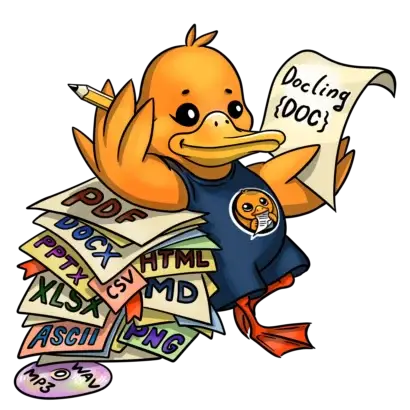
- Works across formats – PDF, DOCX, HTML, Markdown, images… even PowerPoint.
- Easy to audit – Outputs Markdown side-by-side with source text so you can visually check fidelity.
If you’ve ever spent an afternoon debugging why your chatbot can’t answer a basic question from a PDF, Docling feels like a superpower.
Seamless with Your RAG Stack
Docling isn’t just a parser, it’s a document transformation layer for your AI pipeline.
Use it with:
- LangChain: Swap in Docling as your loader for cleaner context windows.
- LlamaIndex: Structure documents ahead of indexing for smarter retrieval.
- Langflow: Add document parsing to your flow or as a tool for an Agent with a simple component.
- Microsoft Copilot Studio: Clean input means better grounding and fewer hallucinations.
- Open inference chains: Export to JSON or Markdown, and hand off to whatever you’ve built.
No more janky regex or custom scrapers just to get usable inputs.
Try It Yourself (It’s Open Source)
Docling is MIT-licensed, built by IBM Research, and already being adopted by folks at Red Hat and beyond.
pip install docling
You can start parsing documents with a few lines of code. And the output? Human-readable, verifiable, and ready for LLMs.
Check out the GitHub repo or play with the demo to get a feel for what’s possible.
What This Means for Builders
If you’re working in RAG, Copilots, or document-based AI, you need a preprocessing layer.
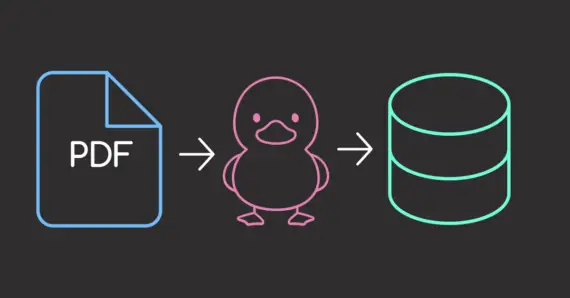
Docling gives you:
- Confidence your inputs are clean
- Speed to ingest massive corpora of knowledge
- Control over structure and format
- Compatibility with your downstream stack
And unlike most open-source “document loaders,” this one doesn’t stop at PDFs. It handles layout, tables, metadata, and governance—right out of the box.
Your Next Step
If you’re building GenAI tools for regulated industries, finance, government, or anywhere documents matter, you need a preprocessing layer that keeps up.
Start by picking one document your current system struggles with. Run it through Docling. Compare the output.
You might never go back.
And if you do try it out, I’d love to hear what you’re building.
