Updated August 2026
Most people assume telecom is an unshakable industry, dominated by billion-dollar giants and money sucking billing models with hidden fees.
BUT, what if I told you there’s a blockchain-powered phone plan offering reliable service that’s already live and working… and it’s not coming from Verizon, AT&T, or T-Mobile?
It’s coming from you. And me. And anyone else willing to participate in a new kind of infrastructure: one owned and operated by the people, not corporations.
That’s what Helium Mobile delivers, real-world phone service powered by a Decentralized Physical Infrastructure Network (DePIN) and incentivized to build a larger network through crypto mining. No crypto wallet needed to use the service. No strings attached.
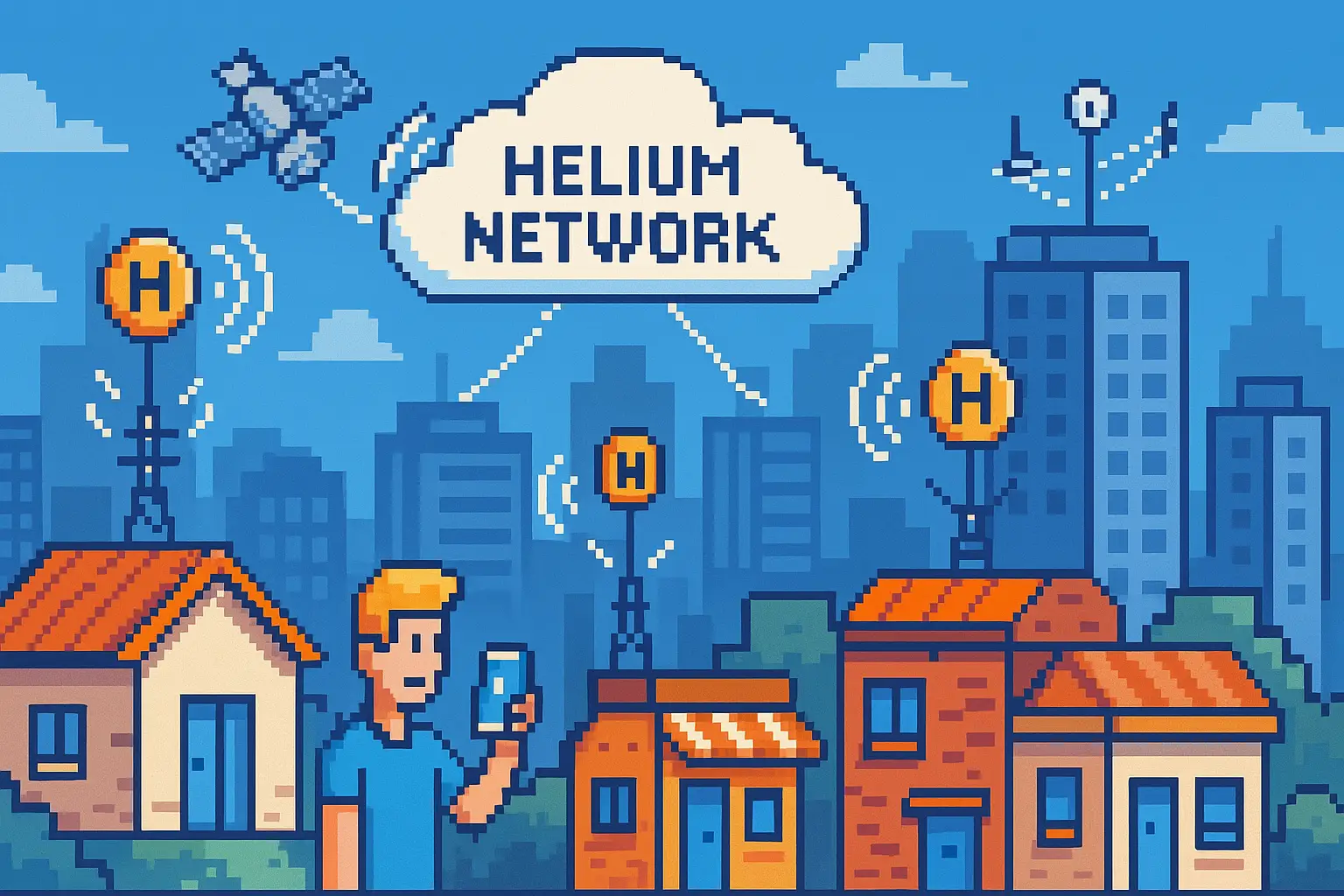
Instead of relying solely on legacy infrastructure, Helium taps into a decentralized network run by regular people. Anyone can deploy a hotspot, contribute 5G coverage, and get rewarded in HNT – the native Helium token. That same network powers Helium Mobile, a phone service offering affordable phone plans (with data, texts, and minutes!), built on a mix of traditional telecom and blockchain-based innovation.
Here’s a quick overview:
- Helium Network is a decentralized wireless network powered by individuals running hotspot nodes.
- HNT is the cryptocurrency earned by people who contribute coverage and pass data transmission to the Helium ecosystem.
- Helium Mobile is a cell phone service that uses both traditional carriers and Helium’s decentralized infrastructure to deliver coverage.
- DePIN (Decentralized Physical Infrastructure Network) is the tech stack making this all work by letting people build real-world infrastructure using blockchain.
- The Zero Plan (ending June 11, 2026) previously offered a free phone service with no contracts or crypto knowledge required. Sad to see this plan go!
If that grabs your attention and you’re ready to go down the rabbit hole, let’s continue!
What Is Helium, and What Is HNT?
Helium is a decentralized wireless network. Instead of relying 100% on traditional telco giants, Helium’s network is powered by individuals running hotspots from their homes, offices, or businesses. These hotspots provide LoRaWAN and 5G coverage, and every time data passes through them, the person hosting the node earns HNT (Helium Network Token).
In other words: you’re getting paid to share bandwidth and process data. It’s like Airbnb for wireless service.
That’s what makes it different. Instead of a single corporation owning all the infrastructure, it’s owned and operated by thousands of people around the world who get compensated in crypto for their contribution.
Need help running RAG in low connectivity environments? Read my guide here!
So What Is Helium Mobile?
Helium Mobile is a mobile phone service that runs on both traditional cell networks (via T-Mobile, in the U.S.) and the decentralized Helium 5G network. When your phone can connect to a Helium hotspot, it does. If it can’t, it falls back on T-Mobile’s national coverage.
So you get the best of both worlds: enterprise-level coverage + community-powered pricing.
Helium offers affordable plans, including kids plans, with the Air Plan at $15/month boasting:
- 10 GB of high-speed data (5 GB usable as mobile hotspot)
- Unlimited text messages
- Unlimited minutes of talk time
- Additional data available at $5/GB in the app (taxes and fees apply)
No contracts. No crypto wallet setup. No asterisk. I use this plan for a phone line of my own and it works flawlessly!
What Is DePIN and Why Does It Matter?
DePIN stands for Decentralized Physical Infrastructure Network. It’s a new movement in Web3 that allows people to build and operate physical infrastructure (like wireless networks, energy grids, data storage, and more) using blockchain incentives.
In a DePIN network like Helium:
- Individuals buy and deploy hardware (like 5G antennas or Wi-Fi routers).
- That hardware connects to a blockchain.
- When the hardware is used by others, the owner earns token-based rewards.
This approach disrupts the old model where only large telecom or utility companies could build infrastructure. It’s democratizing access and ownership, and it’s already being used to power real-world services like Helium Mobile.
Why This Matters (and Why You Should Pay Attention)
Most people don’t even know their phone plan could work this way.
With Helium Mobile, you don’t have to care about crypto, blockchain, or decentralization. You just sign up, use your phone, and save money. But behind the scenes, you’re participating in a totally new kind of network – one built by people, not corporations. And if you do care about crypto and privacy, this is one of the most promising real-world use cases we’ve seen yet.
Big news that actually strengthens the case I’m making here. As of June 2, 2026, Helium Mobile is being acquired by Noble Mobile, and if you’ve been paying attention to this space, this is a good thing for the network.
Who’s Andrew Yang? Noble Mobile was founded in 2025 by entrepreneur and former U.S. Presidential candidate Andrew Yang. The pitch is delightfully contrarian: it launched as the first carrier to actually pay you to use your phone less. Different angle, same core belief that’s been driving Helium all along, which is that Americans pay way too much to stay connected.
Why this is bullish for the network: Here’s the part that matters for everything I wrote above. As part of the deal, Noble Mobile committed to use the Helium Network for coverage, and the Helium team is now free to do what it does best, building infrastructure. Instead of splitting focus between running a consumer carrier and building a decentralized network, Helium is doubling down on becoming an intelligent connectivity platform that any carrier or connected service can build on, Noble Mobile included.
Why Business Leaders Are Watching This
For business unit leaders and IT decision-makers, dePIN isn’t just a consumer trend, it’s a glimpse at what decentralized infrastructure could do to reduce costs and unlock new efficiencies. Whether it’s employee connectivity, IoT expansion, or edge data collection, decentralized infrastructure could soon be a meaningful part of your ops model. And unlike typical blockchain buzzwords, this one’s live, working, and saving people money today.
Want to Get Technical?
For data engineers, developers, or network professionals, Helium is more than a cool phone plan – it’s a live example of a token-incentivized, physically deployed, peer-coordinated network. You can dive into:
- How hotspot traffic is tracked and rewarded
- The tokenomics of HNT emissions and staking
- The interplay between Helium’s blockchain and traditional telecom backbones
Whether you want to build a DePIN project or just better understand how it works, this is a great place to start.
Final Thoughts: How to Try It Today
If you want to try a Helium Plan, here’s what to do:
- Go to hellohelium.com or helium.com
- Check if your area is eligible
- Order a SIM card or bring your own eSIM-compatible device
- Activate and start using it like any other phone plan
If you need a referral code, use code RLDKGCH: https://app.heliummobile.com/o6WA/onpqdvsk
You don’t need to know anything about crypto. You just need a phone. One note: with the Noble Mobile acquisition underway, plan names and signup flows may continue to evolve, so double-check the latest offers in the app.
Want to Build or Earn with dePIN?
If you want to earn HNT by deploying hotspots or you’re curious about how to build DePIN infrastructure yourself, let’s talk.
We’re early in this space, and there’s room for more builders.
Reach out, and let’s explore it together.
